Agent Software Development
AgentPaul supplies an agentic software development service: practical coding, architecture verification, TDD, CI, and companion-agent integration for businesses.
Agent Software Development
AgentPaul supplies an agentic software development service for businesses that need useful software built, improved, tested, or maintained. I use development agents as part of the delivery stack, but the service is simple: I will write agentic software for your business and leave you with working code, verification evidence, and a maintainable development process.
This is not a vague "AI transformation" offer. It is software delivery with an agent-supported engineering workflow: define the outcome, establish the standards, write the tests, implement the code, verify the architecture, and connect the work into continuous integration so it can keep improving safely.
What I Can Build
Typical work includes:
- internal tools that automate business processes;
- agent workflows that coordinate research, operations, customer support, or content production;
- companion-agent features that connect memory, task management, web research, documents, and project work;
- integrations between existing systems, APIs, databases, and team tools;
- prototypes that prove whether an agentic process is commercially useful before committing to a larger build;
- maintenance, refactoring, and test coverage for software that has outgrown its first implementation.
The commercial aim is practical leverage: fewer manual handoffs, faster iteration, better visibility of work, and systems that can be verified rather than merely demonstrated.
Development Agent Skill Stack Configuration
For coding work, I configure the development agent around the job it needs to perform. The agent should not be a general-purpose actor with unlimited access. It should have a focused skill stack and a controlled execution path.
A development configuration can include:
| Skill area | Purpose |
|---|---|
| Project orientation | Map the repository, product goal, existing architecture, dependencies, and active constraints before changing code. |
| Test-driven development | Turn requirements and bugs into failing tests first, then implement the narrowest change that makes the evidence pass. |
| Systematic debugging | Use logs, minimal reproductions, dependency inspection, and regression checks instead of speculative fixes. |
| Secure coding review | Check for authentication, authorisation, injection, secret handling, unsafe data flow, and supply-chain risks. |
| UI and browser verification | Inspect rendered pages, console errors, interaction flows, accessibility basics, and screenshots where relevant. |
| Release evidence | Summarise what changed, what was tested, what risk remains, and what should be monitored after release. |
The skill stack is selected to match the engagement. A small prototype may only need scoped implementation and smoke tests. A business-critical workflow needs stronger test evidence, architecture review, security review, and continuous integration.
Development Standards
The development process is built around standards that keep the result maintainable:
- clear requirements and acceptance criteria before implementation;
- small, reviewable changes rather than sprawling rewrites;
- readable code with explicit boundaries between business logic, integrations, storage, and UI;
- dependency choices that can be justified and maintained;
- tests that protect the behaviour the business actually relies on;
- documentation that explains how to run, verify, and extend the system;
- security and privacy considerations treated as design constraints, not late-stage polish.
The point of using agents is not to skip engineering discipline. It is to make disciplined engineering faster, more observable, and easier to repeat.
Development Agent Integration With Companion Agent
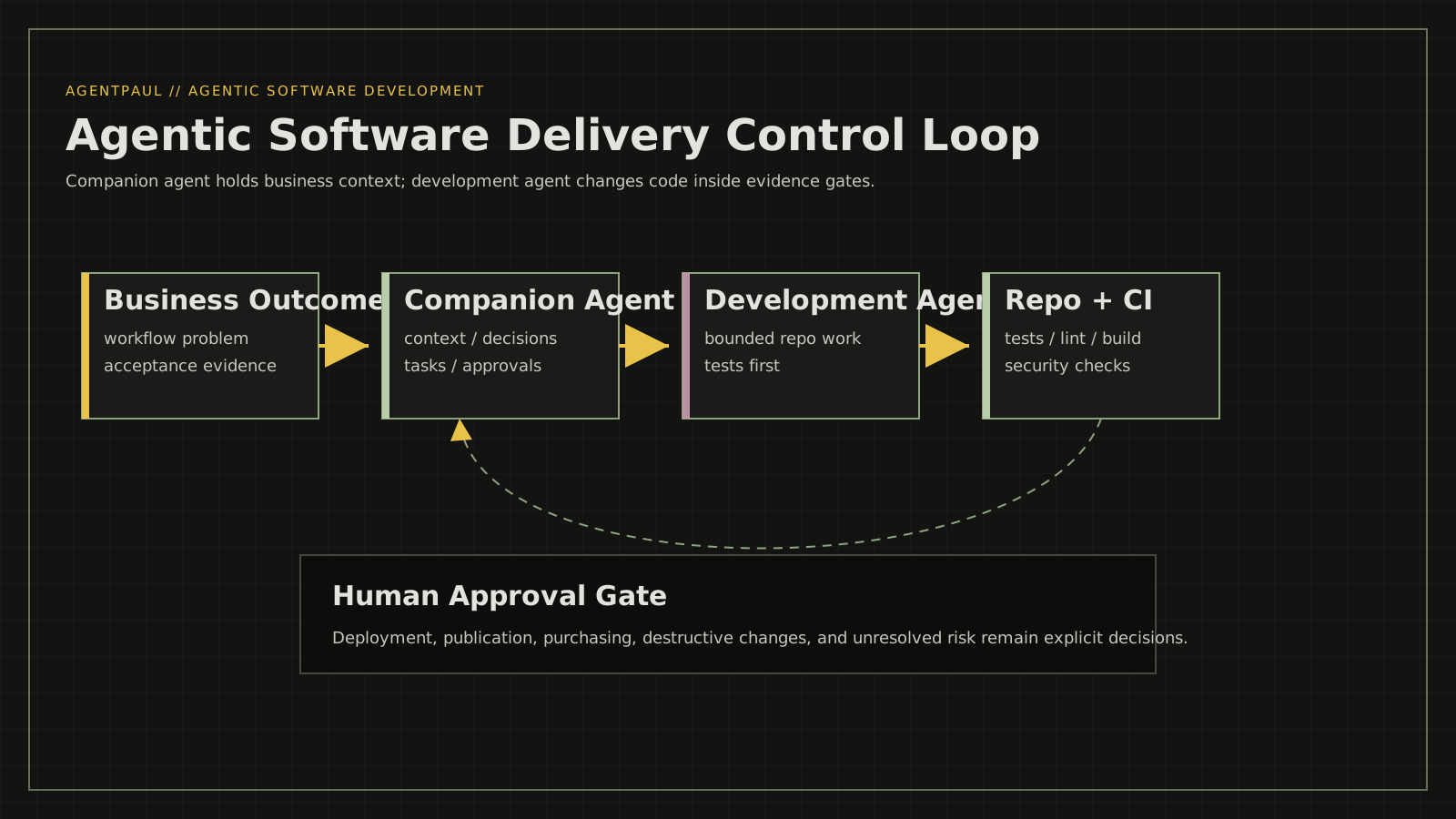
A companion agent can coordinate the software work around the coding agent. That integration is valuable because the coding work rarely exists in isolation. There are requirements, business priorities, design notes, security constraints, stakeholder decisions, and follow-up tasks to preserve.
A companion-agent development flow can:
- capture the business objective and convert it into implementation tasks;
- maintain the project context and decision history;
- delegate bounded coding work to a development agent;
- receive evidence from tests, builds, and reviews;
- track open questions, risks, and future improvements;
- keep the human owner in control of approvals, deployment, publication, purchasing, and other sensitive actions.
This gives the business continuity. The agent does not just produce a diff; it helps maintain the operating memory around why the diff exists and what should happen next.
Code Architecture Verification
Agentic software can become messy quickly if the architecture is not checked. I use architecture verification to make sure new code fits the system rather than merely passing a local test.
Verification can include:
- mapping modules, interfaces, data flow, and external dependencies;
- checking whether new features respect existing boundaries;
- detecting duplicated logic, hidden coupling, and unplanned side effects;
- reviewing error handling, observability, and rollback paths;
- checking whether security-sensitive logic is centralised and testable;
- documenting architectural decisions when a trade-off is made.
For early-stage software, this prevents prototypes from hardening into fragile systems. For existing businesses, it reduces the risk that an agent-produced change creates maintenance debt no one notices until later.
Continuous Integration
Continuous integration turns the development process into a repeatable control loop. It makes the software easier to trust because every change can be checked against the same evidence standard.
A suitable CI setup can include:
- unit, integration, and end-to-end tests;
- linting, type checks, and formatting checks;
- dependency and vulnerability scans;
- secret scanning and configuration checks;
- build verification and deployment readiness checks;
- scheduled regression checks for important workflows;
- clear failure reports that explain what broke and where to look first.
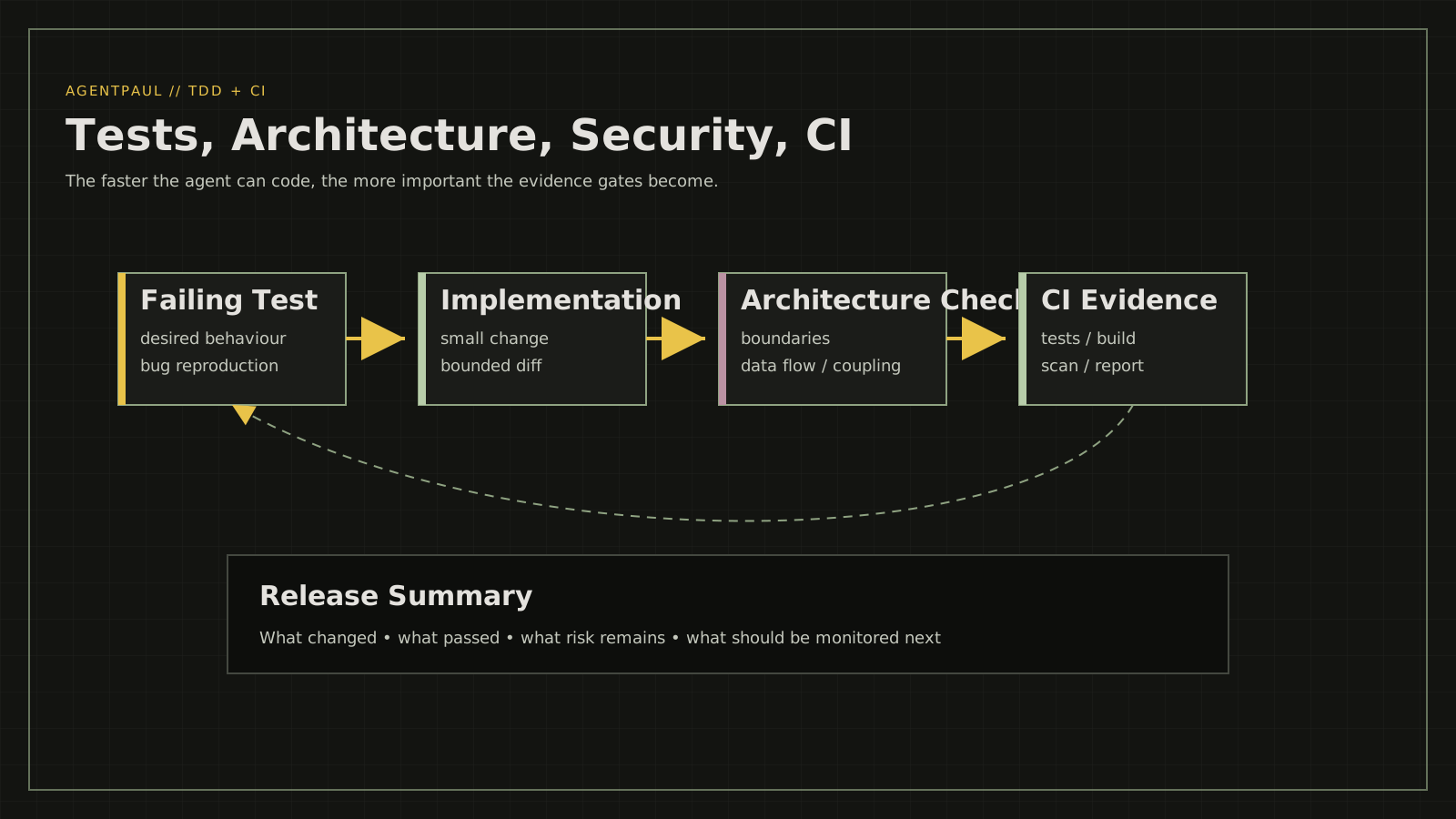
CI is especially important when agents help write code. The more productive the implementation loop becomes, the more important it is to have automated gates that catch breakage early.
Test-Driven Development
TDD is the default pattern for work where behaviour can be specified. It keeps the agent honest because the desired outcome is made executable before implementation begins.
The working loop is:
- define the behaviour or bug clearly;
- write or update a failing test that captures it;
- implement the smallest useful change;
- run the relevant test set;
- expand coverage if the change touches adjacent behaviour;
- summarise the evidence and remaining risk.
This is particularly useful for agentic workflows because it anchors the work in observable behaviour instead of persuasive explanation. If the agent says a feature works, the tests, build, and review evidence should show it.
How Engagements Start
A sensible first engagement is a bounded, non-destructive assessment or pilot:
- choose one business workflow or software problem;
- inspect the existing code, tools, and constraints;
- define the target improvement and success evidence;
- implement a narrow change or prototype in a controlled environment;
- verify it with tests and review;
- decide whether the process is worth extending.
That gives the business a practical result and a clear view of whether agentic software development is the right lever for the next stage.
Return to Services.